


 Resources
Mastering PPQ: A Practical Guide to Process Performance Qualification in Medical Device Manufacturing
All Resoures
03 Nov 2025
Mastering PPQ: A Practical Guide to Process Performance Qualification in Medical Device Manufacturing
Process Performance Qualification (PPQ) is a critical phase in medical device manufacturing. As the final step in process validation, PPQ demonstrates that production processes consistently yield products that meet predefined specifications under real-world conditions.
This guide explores essential concepts, tools, and best practices to help ensure a successful PPQ strategy.
What Is PPQ and Why Does It Matter?
PPQ confirms that the manufacturing process is:
- Stable: Operates predictably overtime
- Capable: Produces within specification limits
- Repeatable: Performs consistently across batches, operators, and environments
PPQ is vital for maintaining production processes that consistently produce quality product and is essential in achieving overall business objectives.
What is the Difference Between PQ and PPQ?
While Performance Qualification (PQ) and Process Performance Qualification (PPQ) are closely related and sometimes used interchangeably they have distinct meanings in medical device manufacturing.
PQ (Performance Qualification)
- Definition: The third phase of equipment or system validation (following IQ and OQ)
- Focus: Verifies that equipment or systems perform effectively and reproducibly under actual production conditions
- Scope: Applies to individual equipment or systems
- Example: Running a welding process with actual parts to confirm the weld is consistent and meets specifications
PPQ (Process Performance Qualification)
- Definition: A subset of process validation that confirms the entire manufacturing process consistently produces products that meet specifications
- Focus: Includes equipment, materials, methods, personnel, and environmental conditions
- Scope: Broader than PQ; validates the end-to-end process
- Example: Producing multiple batches of a medical device using validated equipment, trained operators, and routine materials to demonstrate consistent quality
Critical Parameters – CTQs and CTFs: What’s Critical?
- CTQ (Critical to Quality): Measurable attributes that must meet specifications to ensure product quality and compliance
- CTF (Critical to Function): Characteristics that directly impact the device’s intended performance
Both should be clearly defined, measurable, and included in your PPQ protocol and ongoing quality control plans. Typically, CTFs are derived using Critical Parameter Management, a systems approach to identifying Critical Functional Requirements, linking CTFs to manufacturing process controls.
Attribute vs. Variable Data
Variable data is generally preferred in PPQ because it enables deeper statistical analysis and stronger justification for process capability and control. Attribute data, such as Pass/Fail or visual acceptance typically lacks resolution to predict statistical performance. While there is a trade-off to collecting variable data as it takes more effort, typically during PPQ it is essential to characterize manufacturing process performance.
Validating What You Measure: Test Method Validation and Gage R&R
A crucial and often overlooked aspect of PPQ is ensuring that the measurement systems used to assess product quality are accurate, consistent, and reliable.
Test Method Validation
- Accurate: Measures what it’s intended to
- Precise: Produces consistent results
- Specific: Distinguishes between acceptable and unacceptable product
- Robust: Performs reliably under expected conditions
Validation includes assessments of linearity, accuracy, precision, detection limits, and robustness.
Gage Repeatability and Reproducibility (Gage R&R)
- Repeatability: Variation from the same operator using the same equipment
- Reproducibility: Variation across different operators or equipment
Aim for a %R&R of less than 10% for high-confidence systems. Conduct Gage R&R studies on all critical gages and inspection methods used to assess CTQs and CTFs.
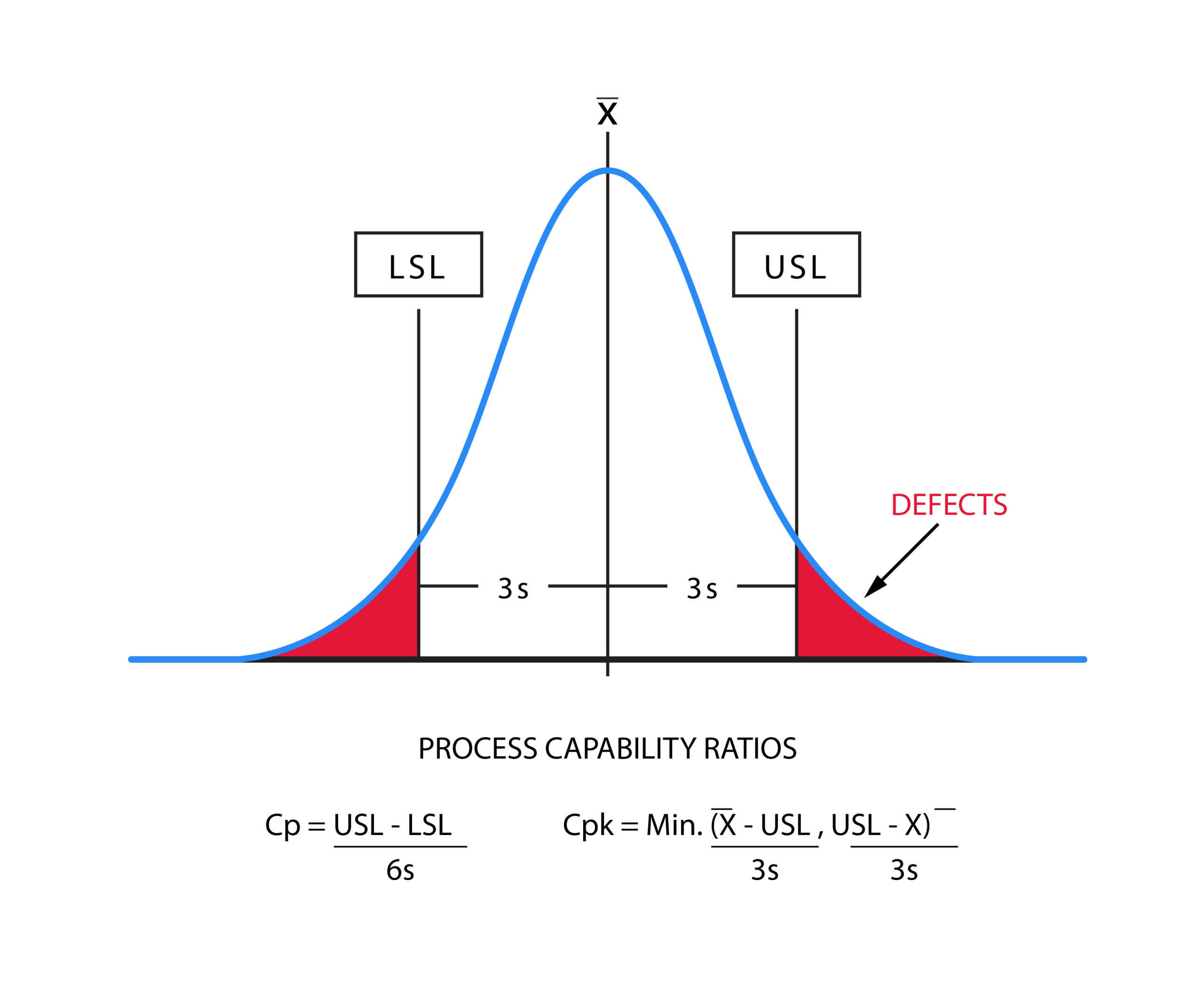
Figure 1. Visualizing process capability (Cp) and performance (Cpk)
Leveraging Statistical Methods: Process Capability and Statistical Process Control (SPC)
- Process Capability (Cp, Cpk, Pp, Ppk): These indices assess how well a process can produce within specification limits. A Cpk of 1.33 or higher is generally acceptable in medical device manufacturing.
- Statistical Process Control (SPC): Uses control charts to monitor process behavior over time, helping detect shifts or trends that could impact quality.
Together, these tools provide the data-driven evidence needed to confirm readiness for full-scale production.
Should You Introduce Variability in Your PPQ Protocol?
Yes, and here’s why. PPQ protocols are expected to reflect routine manufacturing conditions, which naturally include variability. You should intentionally introduce factors such as:
- Different operators
- Material lot changes
- Environmental fluctuations
- Equipment cycling
By doing so, you demonstrate that your process is robust enough to handle real-world challenges without compromising product quality.
PPQ Informs Manufacturing Process Controls
PPQ results directly shape your manufacturing controls:
- Control limits for critical parameters
- Inspection frequency and sampling plans
- Operator training and procedural safeguards
During PPQ, enhanced inspection is expected to verify product quality and gather baseline data. Once validated, inspection levels may be reduced based on statistical justification.
Final Thoughts
PPQ is more than a regulatory checkbox, it’s a strategic tool for building confidence in your manufacturing process. By leveraging statistical tools, planning for variability, validating measurement systems, and focusing on critical attributes, medical device companies can ensure their products are safe, effective, and consistently high-quality.
Related Resources
.webp)
.webp)
— Connect
Your Medical Guide From Concept to Commercialization
Whether you need targeted engineering support, manufacturing process development, or a full development and manufacturing partnership, Meddux provides a modular approach tailored to your program requirements.
Connect with our team to discuss how we can support your next medical device program, from user-centered design through commercial manufacturing.
.svg)

Capabilities

Markets
Our Approach
About Us
Resources
© 2026 All rights reserved
made by
.png)