


All Resoures
09 Sep 2024
Flexibility in Quality Systems for Medical Device Contract Manufacturers
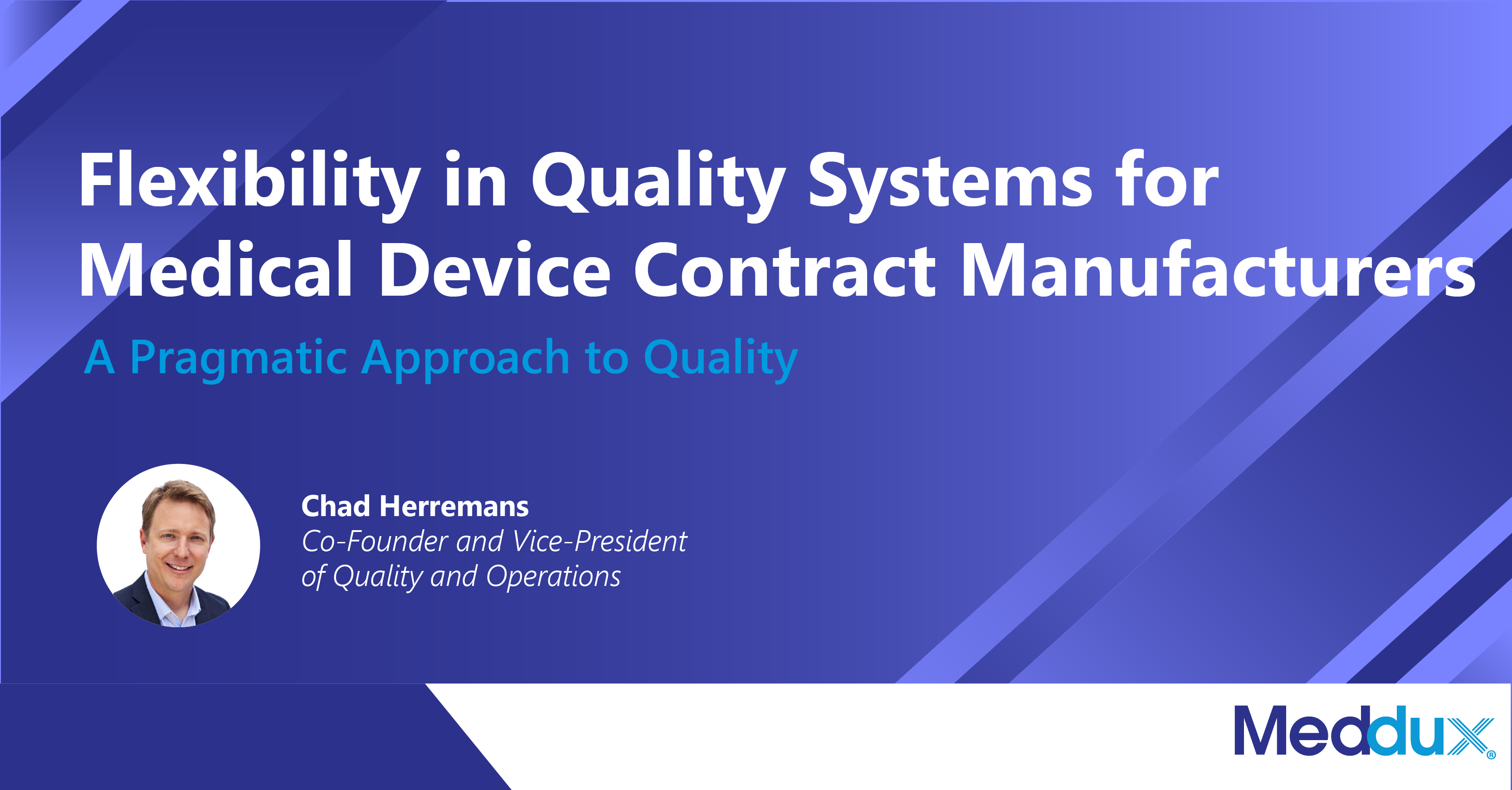
Chad Herremans, co-founder and VP of Operations & Quality
Chad started in manufacturing nearly 20 years ago. He’s held many roles across the industry including operations, new product introduction, process engineering, product design and development, program management, and he’s had a long successful career in quality. Chad has an innate ability to balance customer needs with regulatory requirements leading to a pragmatic and value driven, risk-based approach to Quality and Operations at Meddux Development Corporation. Chad has a complete understanding of the product life-cycle from concept through commercial manufacturing and is proud to work with customers in developing custom tailored strategies and solutions. Chad holds a B.S.in Chemical Engineering from Western Michigan University, and is certified as a quality auditor from the American Society of Quality.
Introduction
Contract manufacturers in the medical device industry must have flexibility within a Quality Management System (QMS). A flexible QMS allows manufacturers to adapt to diverse client needs, varying project requirements, and regulatory changes, ultimately enhancing efficiency and compliance. This post explores the role of flexibility in quality systems and strategies for achieving it.
The Need for Flexibility
Contract manufacturers work with a range of clients, from startups to established medical device companies. Each client may have unique requirements, different documentation styles, and specific regulatory needs. A rigid QMS can hinder the ability to meet these diverse demands, leading to inefficiencies and compliance risks. Flexibility within the QMS allows for accommodating these variations and ensures seamless integration with clients’ systems.
Customizing Documentation and Procedures
A flexible QMS allows for the customization of documentation and procedures to meet client-specific needs. This includes adapting templates, formats, and documentation styles to align with client preferences. For example, a large OEM might require documents in their specific format for easy integration into their existing quality system. Customizing documentation ensures that all processes are aligned with client expectations while maintaining compliance with regulatory standards.
Balancing Flexibility and Compliance
While flexibility is crucial, it should not compromise regulatory compliance. Balancing flexibility with strict adherence to regulations such as ISO 13485 and FDA 21 CFR 820 is essential. How can this balance be achieved? A key strategy is to create planning documents that outline how deviations from standard procedures will be managed while still guaranteeing compliance. These planning documents must be approved internally and by the client, confirming alignment and regulatory requirements are met.
Adapting to Different Client needs
Contract manufacturers often serve clients ranging from small startups to large multinational corporations. Each client may have different needs regarding documentation, risk management, and process validation. For instance, a startup might need more guidance and support in establishing its risk management process. At the same time, a large corporation might require strict adherence to its established risk scoring and ranking systems. Adapting the QMS to cater to these varied needs enhances client satisfaction and project success.
Risk Management and Flexibility
Risk management is a vital component of any QMS. A flexible approach to risk management involves tailoring risk assessment and mitigation strategies to the specific needs of each project and client. For example, a client might have a unique risk ranking system that needs to be integrated into the contract manufacturer’s QMS. Validating that the QMS can accommodate such variations without compromising compliance is essential for effective risk management.
Flexibility in Validation Processes
Validation processes, such as design and process validation, are integral to ensuring product quality and compliance. A flexible QMS allows for adjustments in validation protocols to meet client-specific requirements. This might include using client-provided templates for validation plans, protocols, and reports. By accommodating these needs, contract manufacturers can provide tailored validation services that align with client expectations while maintaining regulatory compliance.
Continuous Improvement and Flexibility
Continuous improvement efforts should also focus on maintaining and enhancing flexibility within the QMS. Regular reviews of the QMS, incorporating feedback from clients and team members, and updating processes to reflect best practices and regulatory changes contribute to a more adaptable system. Encouraging a culture of continuous improvement allows the QMS to evolve to meet changing needs and challenges.
Conclusion
Flexibility within a Quality Management System (QMS) allows contract manufacturers in the medical device industry to adapt to diverse client needs, varying project requirements, and regulatory changes. Customizing documentation, balancing flexibility with compliance, and adapting to different client needs enhances efficiency and client satisfaction. Effective risk management, flexible validation processes, and leveraging technology further contribute to a robust and adaptable QMS. Ultimately, a flexible QMS enables contract manufacturers to navigate the complexities of the medical device industry while maintaining high quality and compliance standards.
Key Takeaways:
- Customization: Adapting documentation and procedures to meet client-specific needs enhances efficiency and compliance.
- Balance: Balancing flexibility with regulatory compliance ensures high standards are maintained.
- Client Adaptation: Adapting the QMS to cater to varied client needs ensures project success and client satisfaction.
- Risk Management: Tailoring risk assessment and mitigation strategies to specific projects improves effectiveness.
- Validation Processes: Flexible validation processes align with client expectations while maintaining compliance.
- Continuous Improvement: Regularly reviewing and updating the QMS ensures it remains adaptable and effective.
Related Resources
.webp)
.webp)
— Connect
Your Medical Guide From Concept to Commercialization
Whether you need targeted engineering support, manufacturing process development, or a full development and manufacturing partnership, Meddux provides a modular approach tailored to your program requirements.
Connect with our team to discuss how we can support your next medical device program, from user-centered design through commercial manufacturing.
.svg)

Capabilities

Markets
Our Approach
About Us
Resources
© 2026 All rights reserved
made by
.png)